
Fragrance is one of the most common gifts and one of the least successful. The reason is straightforward and it is not about taste.
The problem
Skin chemistry is most of the variable, and you cannot test someone else’s skin. A fragrance that is excellent on you may be wrong on them for reasons neither of you controls: skin temperature, oil content, what soap they use.
So even a well informed choice, made by someone who knows the person’s taste precisely, is a guess about the one factor that decides it.
Why the usual advice does not help
People suggest buying something similar to what the person already wears. That is reasonable and it fails more often than you would expect, because “similar” is doing a lot of work. Two fragrances in the same family, with the same listed notes, can behave completely differently on the same skin.
Buying what they mentioned liking on someone else is worse, for the reason above.
What works instead
Give them the choice rather than making it.
A set of samples costs a fraction of a bottle and it removes the guess entirely. The person wears each one properly, on their own skin, over several days, and ends up with something they will actually finish rather than something they will be polite about.
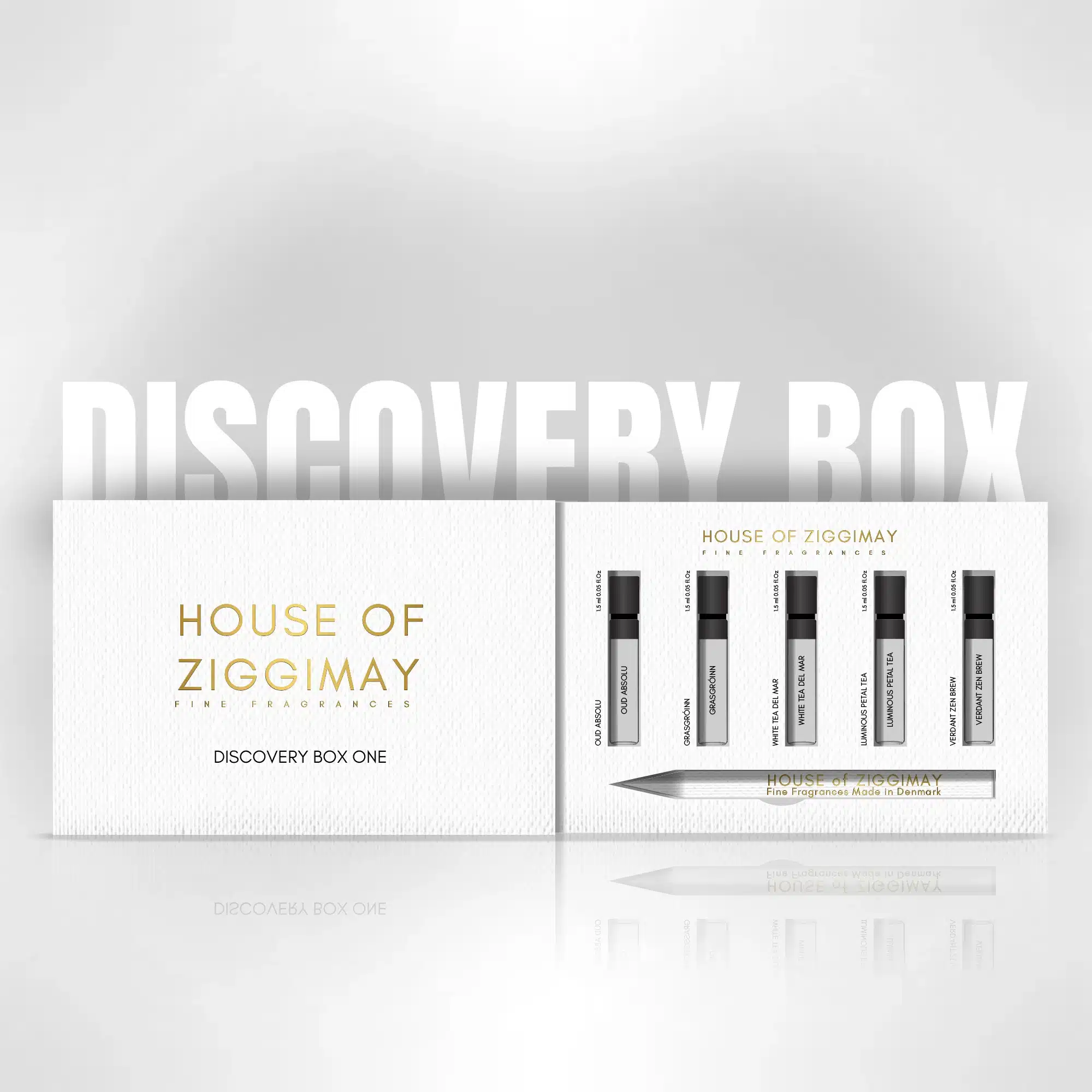
A Discovery Box holds five 1.5 ml samples, one of each fragrance HOUSE OF ZIGGIMAY makes. That is a working week of proper testing, and it costs considerably less than a bottle.
If you are set on a bottle
A few things improve the odds.
Buy the smaller size. 30 ml rather than 50 ml. If it is wrong, it is a smaller mistake, and if it is right they will finish it while it is still at its best.
Choose something quiet rather than distinctive. The dramatic fragrance is more impressive to give and far less likely to be worn regularly.
Keep the receipt and say so. Fragrance cannot be returned once opened, for obvious hygiene reasons, but an unopened bottle can. Fourteen days is standard here.
What not to do
Do not buy a fragrance because the bottle is beautiful. It is the single most common way this goes wrong, and the person is then left with an ornament they feel obliged to keep.
Do not buy something because it is expensive. Price has almost no relationship to whether a fragrance suits a particular person, and an expensive one they do not wear is a worse outcome than a modest one they do.
Do not buy a gift set of several small bottles unless you know they like all of them. It multiplies the guess rather than hedging it.
If you know what they wear
The most useful thing you can do is find out what is actually in it, rather than buying something with a similar description.
Look at what the house says about the materials, not the notes list, which is a description of an intended impression rather than a statement of contents. If their favourite is built on vetiver and musk, another fragrance built on vetiver and musk is a far better guess than one that merely sounds similar.
Better still, ask them which of their bottles they no longer wear and why. People answer that question honestly, and it rules out more than a list of preferences ever will.
Gift sets
A set of several small bottles seems like hedging and is usually the opposite. You are making four guesses instead of one, and the person is left with three bottles they feel obliged to keep.
A sample set is different, because nothing in it is a commitment. The person tries each one properly and then chooses, which is the decision you could not make for them.
The short version
Give them the means to choose. Samples are not a lesser gift than a bottle, they are the version that respects the fact that you cannot know, and they end in something the person will wear.