
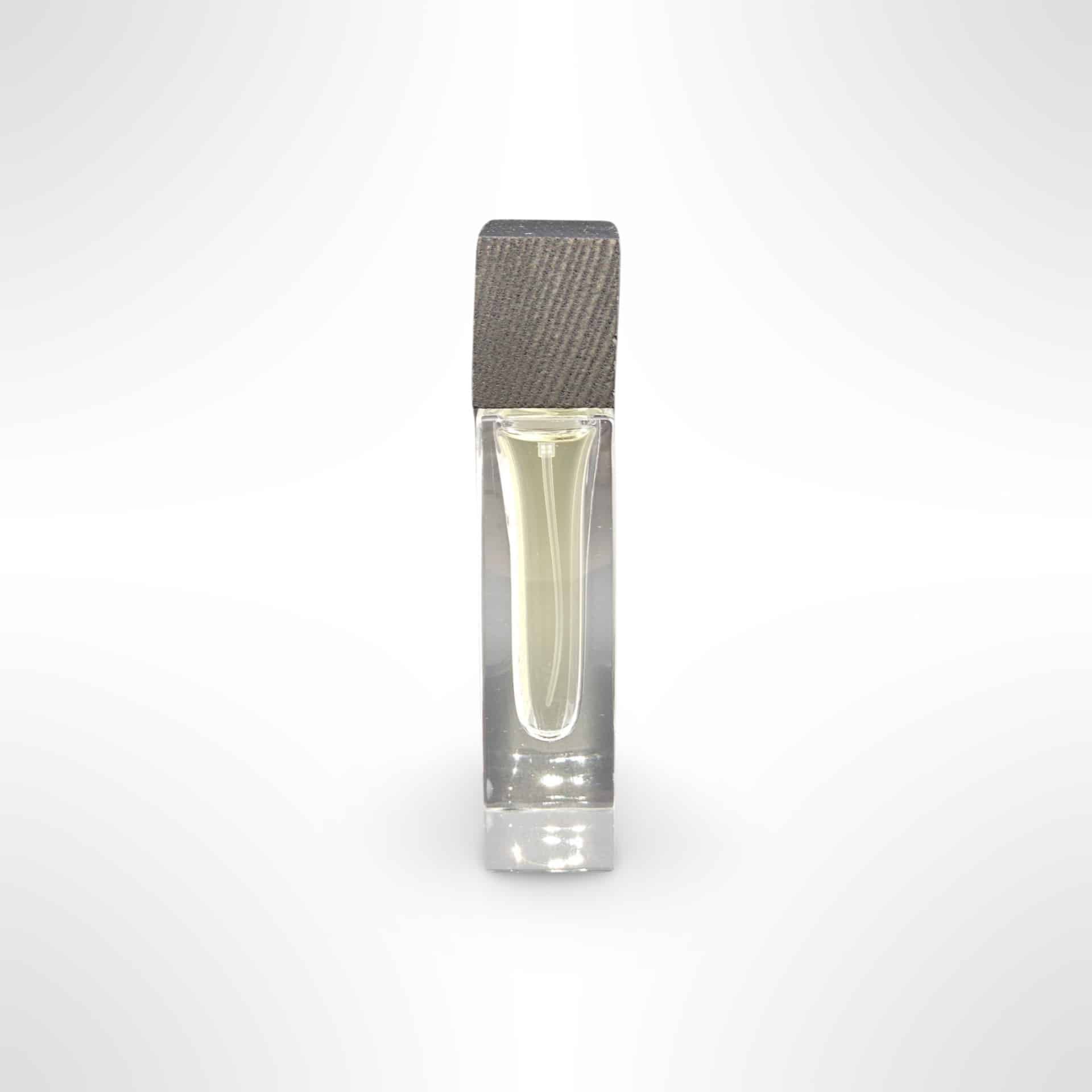
Layering means wearing two fragrances at once so that the result is something neither of them is alone. It is worth knowing that most attempts fail, and that the failures are predictable.
Why it usually goes wrong
Every fragrance is already a finished composition. It has been balanced so that the parts arrive in a particular order at a particular strength. Putting a second one on top does not add to that balance, it competes with it.
The common failure is two fragrances both trying to be the main event. You get a muddle where you can identify neither, and it usually lasts all day because you cannot wash one of them off.
The rule that makes it work
One leads, the other supports.
Choose a simple fragrance as the base, something with a clear character and not much going on: a plain wood, a musk, a single flower. Then put a more complex one over the top. The simple one fills in underneath without arguing.
Reverse that, put two complicated things together, and it will not work.
Combinations worth trying
Citrus over wood is the safest. The wood gives the citrus something to hold on to and the citrus stops the wood feeling heavy.
Musk under almost anything. Musk is largely structural, it pushes other things forward rather than competing with them.
Green over warm. A grassy or herbal fragrance over something with vanilla or resin underneath gives you brightness on top and warmth beneath, which is roughly how a lot of fragrances are built anyway.
Combinations to avoid
Two florals. You get a bouquet, and bouquets read as cheap almost immediately.
Two ambers or two ouds. Both are already dense. Together they are airless.
Anything sweet over anything sweet. Sweetness compounds faster than any other quality and the result is cloying within the hour.
How to apply it
Base first, on skin, and give it a minute to settle before the second. Use less of both than you would use alone: if a normal application is three sprays, use two of the base and one of the top.
Keep them in the same place. Putting one on your wrists and one on your neck does not layer them, it just means you smell of two different things depending on where someone is standing.
Layering with what you already own
Before buying anything for the purpose, look at what is already in the cupboard. The unworn bottles are the best candidates, because a fragrance that was too loud or too sweet alone is often exactly right underneath something else.
A sweet fragrance you found cloying will frequently work as a base under something green, where the sweetness becomes warmth rather than the main event. A wood you found too dry will soften under a floral.
This is the most useful thing about layering and almost nobody does it. It rescues bottles rather than requiring new ones.
Seasons change the answer
A pairing that works in November can be too much in July, because heat speeds up evaporation and everything arrives at once.
In warm weather use less of the base and more of the lighter one, or drop the base entirely. In cold weather the reverse: the base does more work because everything is evaporating more slowly and you need something that keeps releasing.
Keeping track
Write down what you tried and what happened, in one line. This sounds fussy and it is the difference between developing a sense for it and repeating the same three combinations.
Note the order, the number of sprays of each, and whether it still worked at four in the afternoon. That last one is the whole test, because layering failures usually announce themselves in hour three rather than in the first ten minutes.
When not to bother
If a fragrance is already complex and you like it, leave it alone. Layering is not an upgrade, it is a different thing, and a well composed fragrance is already balanced in a way your combination will not be.
Layering earns its place when you want something that does not exist, or when you want to make something you own wearable again. Not as a habit applied to everything.
Test it before you commit to it
Layering is exactly the kind of thing worth trying with samples rather than bottles. You are looking for a combination that still works at four in the afternoon, and there is no way to predict that from the first ten minutes.
A Discovery Box holds five 1.5 ml samples, one of each fragrance HOUSE OF ZIGGIMAY makes, which is enough to try every pairing on your own skin before you commit to anything.