
Niche has become a marketing category rather than a description, which makes it close to useless as a signal. Plenty of niche houses are owned by the same conglomerates as the designer brands they position themselves against.
What follows is how to tell, and what to actually look for.
What niche was supposed to mean
Originally it meant a house making fragrances without designing them around a mass audience. Smaller production, higher material cost, and a willingness to release things that would not test well in a focus group.
The useful part of that definition is the last bit. A genuinely independent house can put out something divisive. A brand answering to a large parent company generally cannot.
Signals that mean something
How many fragrances they make. A house with two hundred is running a factory. A house with five has to stand behind each one.
Whether they will tell you what is in it. Not the full formula, which is nobody’s business, but the actual materials rather than a paragraph of atmosphere.
Whether samples are easy to get. A house confident in its work wants you to try it before you spend. A house that makes sampling difficult is relying on the packaging.
Where it is made. Not for snobbery, but because it tells you something about cost structure. A house manufacturing in a high-wage country is not competing on price, which means it has to compete on something else.
Signals that mean nothing
Price. There is no relationship between what a fragrance costs and what is in it. Packaging and marketing routinely account for more of the price than the liquid.
The word artisanal, which is unregulated and appears on things made in vats.
Long ingredient lists. A hundred materials is not better than thirty, and often means nobody could decide.
Scarcity language. Limited editions that are permanently available are a sales technique.
How to actually explore
Buy samples, not bottles. This sounds obvious and almost nobody does it, because a bottle feels like a decision and a sample feels like postponing one.
Wear one fragrance per day, on skin, and give it the whole day. Do not sniff your wrist every ten minutes. The question is whether you notice it at three in the afternoon and are pleased.
Keep notes, briefly. After four or five you will not remember which was which, and the descriptions all blur.
Ignore your first impression. It is measuring the top notes, which is the part you will wear for fifteen minutes out of eight hours.
Reading a notes list properly
A published notes list is a description of an intended impression, not a statement of contents. This is standard practice across the industry and it is not dishonest, but it misleads people who read it as a recipe.
A fragrance listing fig, sea salt and driftwood may contain none of those. Fig is reconstructed from other materials. Sea salt is not a perfume ingredient. Driftwood is an idea. What the list is telling you is the picture the perfumer was aiming at.
The more useful signal is what a house says when you ask directly. A house paying for good materials will name them. A house paying for packaging will describe a feeling.
What sampling actually costs
The objection to sample-first buying is that it takes longer and costs something up front. Both are true and the arithmetic still favours it heavily.
A full bottle you wear twice is a total loss. Five samples that identify one fragrance you wear for two years is the cheapest thing you will do in this category. Most people have at least one unworn bottle in a cupboard that cost more than a decade of sampling would.
The real cost is patience, and it is the part people skip.
Building a reference for yourself
After a dozen samples you will start to notice which materials keep appearing in the ones you like. That is more useful than any family label, because it is specific to you.
Keep it simple. One line per fragrance: what you noticed, when you noticed it, and whether you wanted it again. Do not try to write reviews. The point is to find the pattern, and the pattern usually turns out to be two or three materials rather than a category.
Once you know the materials, you can read a range and make a reasonable guess before you sample, which is the only shortcut that actually works.
The only test that counts
Everything above narrows the field. None of it tells you whether a specific fragrance suits you, because that depends on your skin and nothing else.
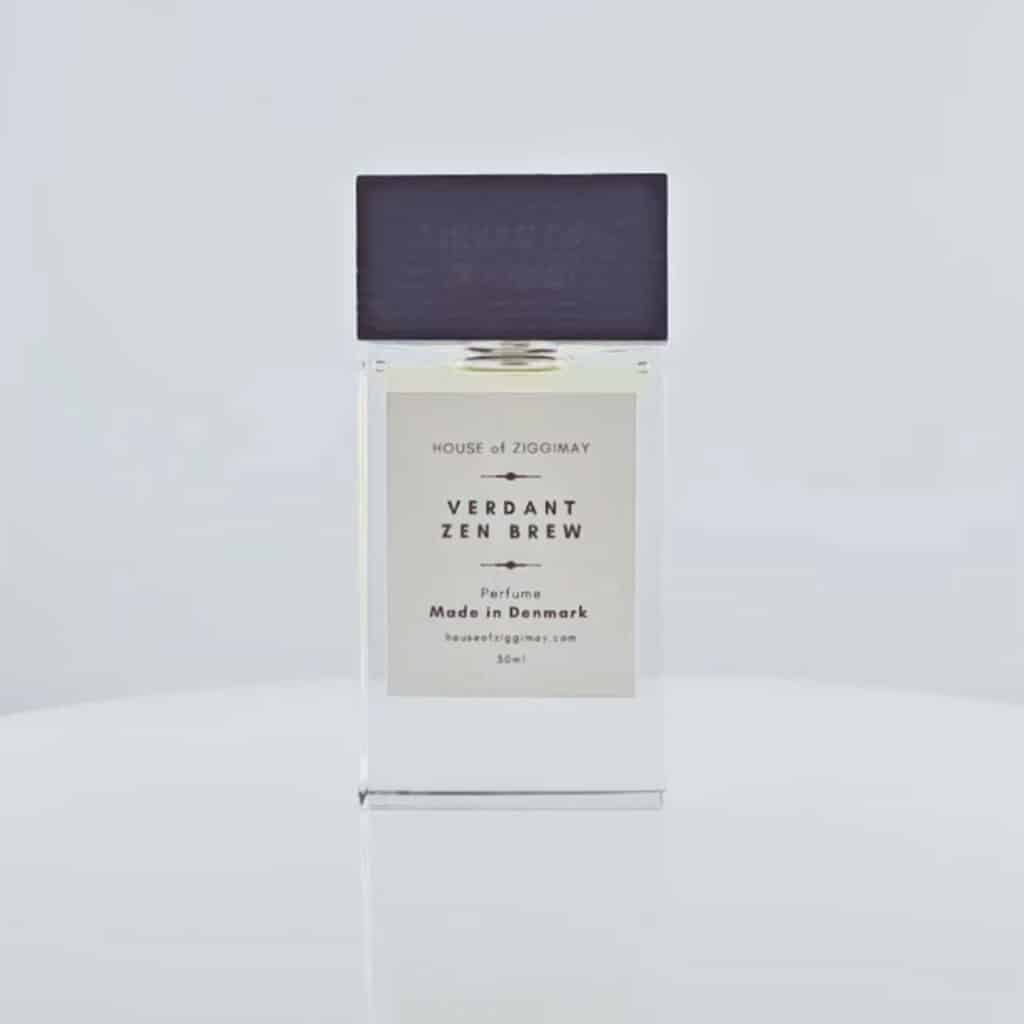
Every bottle we send comes with two 1.5 ml samples you choose yourself, and a Discovery Box holds five, one of each thing HOUSE OF ZIGGIMAY makes. That is enough to find out properly, which is the whole point.
Further reading: Buying niche perfume in Denmark, on finding a Danish stockist, testing properly, and what an import costs once it clears customs.