
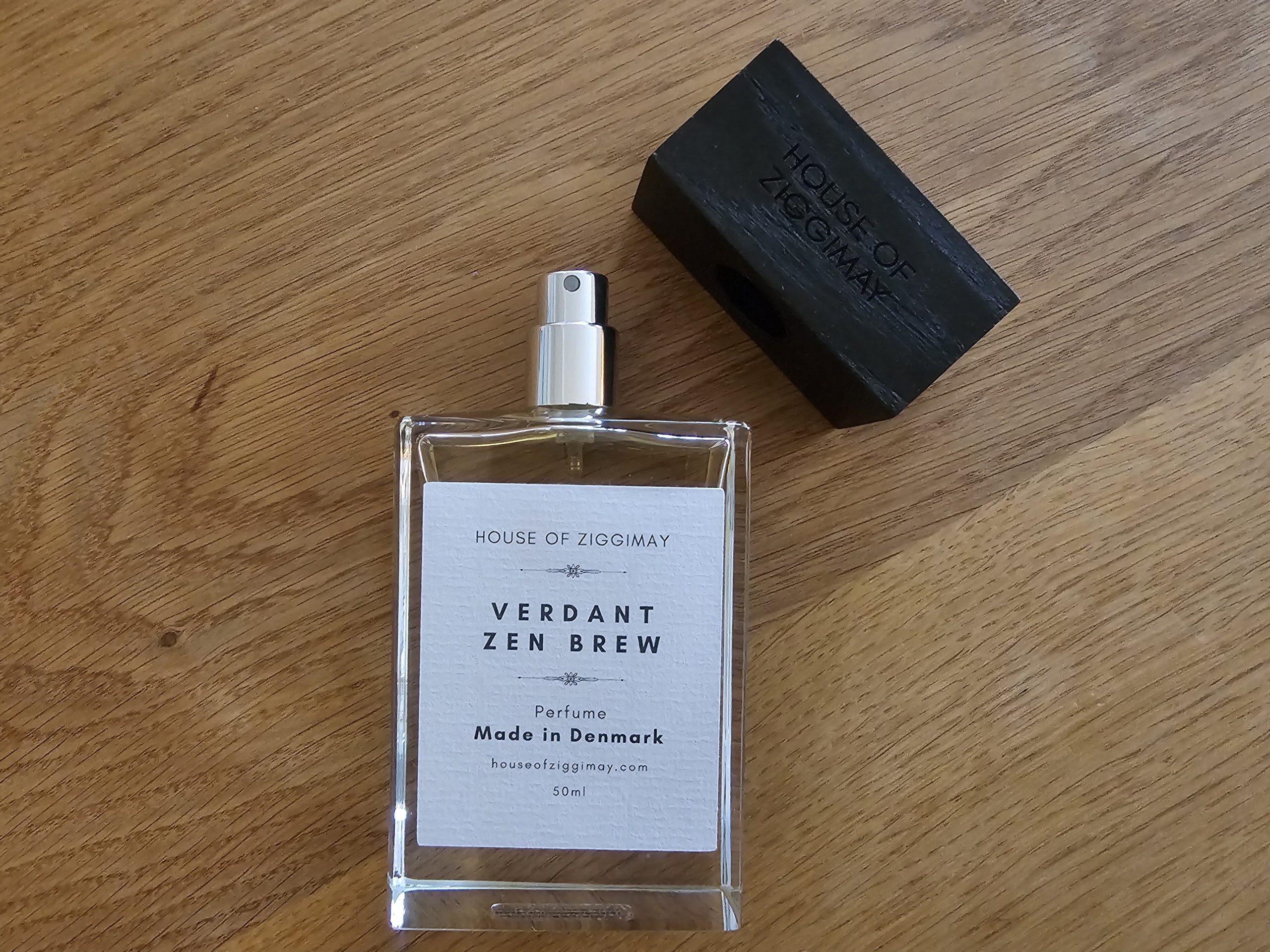
A 50 ml eau de parfum can cost 300 DKK in one shop and 3,000 DKK in another. Same size, same category, same alcohol base, and nothing on either box explains the gap.
Here is where the money goes, in the order it stacks up: materials, concentration, batch size, packaging, the journey to the shelf, VAT, marketing. None of it is secret, and most of it is simply not printed anywhere.
What the liquid costs
Perfume oil is bought by the kilo, and the spread between materials is enormous. Commodity synthetics, the workhorses that appear in almost everything, are measured in tens of kroner per kilo. Specialised synthetics cost considerably more. At the far end sit materials like orris butter, made from iris roots dried for three years before distillation, which is one of the most expensive ingredients in perfumery and is priced accordingly. Oud, sandalwood, jasmine and rose sit somewhere between, and move with each harvest.
The unflattering part, and it is worth saying plainly: on a widely distributed designer fragrance, the concentrate is a small fraction of what you pay at the counter. Precise figures are commercially confidential and anyone quoting one exactly is guessing, but the direction is not in doubt. The liquid is rarely the expensive thing in the box.
That is not a scandal. It means the cost sits elsewhere, and elsewhere is the rest of this piece.
Concentration, and what it does not tell you
Eau de toilette, eau de parfum and extrait describe how much perfume oil is dissolved in the alcohol. Roughly 5 to 15 percent for a toilette, 15 to 20 for a parfum, more again for an extrait. None of these terms is legally defined, so treat the numbers as conventions rather than promises.
More oil costs more, near enough proportionally, which is why one scent often appears at three prices in three strengths. More oil is not better. A carefully built eau de toilette can outlast a crowded eau de parfum, because longevity comes from which materials are used and how they are balanced, not from the percentage on the box.
Batch size, and the cost of being small
A house blending five hundred litres buys everything at a different price from a house blending five. That is true of materials and truer of components, where glass and cap suppliers set minimum orders in the tens of thousands of units. A small producer either pays a high price per unit or fills a warehouse with stock it cannot yet sell. Both cost money.
Labour is the other half. Filling, capping, labelling and packing by hand takes real minutes per bottle, and Danish minutes are expensive.
Small batch is a genuine cost. It is also an unregulated phrase, so on its own it tells you nothing at all.
Glass, caps and boxes
Lift an expensive bottle and part of the answer is already in your hand. Thick glass at the base, a weighted cap, printing directly onto the glass rather than a label.
Packaging can cost as much as the liquid inside it, and heavy glass costs more to ship. None of it changes the smell. It changes the minute you spend opening the box, which is worth paying for if you enjoy that minute and worth ignoring if you do not.
Every hand between the blender and you
Between the person who made the perfume and the person who wears it there can be four sets of books: brand, distributor, wholesaler, shop. Each adds a margin to the price it paid, so the increases compound rather than simply add.
The final step is often close to a doubling. That is not greed. It pays the rent, the person who lets you try things, the testers that get used and never sold, and the stock that never moves.
Selling direct removes layers. It does not remove costs. A house selling from its own site still pays for photography, packaging, card fees, postage and every sample it puts in the post. The money moves. It does not disappear.
VAT takes a fifth
Danish VAT is 25 percent, and consumer prices here are displayed with it included. A fifth of the shelf price is tax. On a 1,000 DKK bottle, 200 DKK goes to the state before anyone has paid for a drop of oil.
This is worth remembering when a site outside the EU looks cheap. Those prices are usually quoted without local tax, and since 2021 Danish VAT applies from the first krone on imports, with a clearance fee on top. The saving narrows quickly, and often disappears.
Marketing is the line you cannot see
Marketing moves prices more than almost anything above it, and it appears nowhere on the label. A licensed name, a campaign film, magazine pages, airport lightboxes, testers on every counter in the country.
For the largest fragrance brands this is understood to be one of the biggest costs in the bottle, larger than the liquid by a wide margin. The exact proportions are not published, so treat any precise percentage you read with suspicion, including ours if we offered one.
A heavily advertised perfume is not a worse perfume. The campaign is part of what is being sold, and if the scent suits you that is a fair trade. If the campaign does not interest you, houses that never run one are not hard to find.
A high price proves nothing on its own
Expensive materials can be assembled clumsily. Modest materials can be assembled with real skill. A price describes a business model, its scale, its distribution and its advertising, in proportions you cannot see from the outside.
The only test that settles anything is your own skin, over a full day, in your own weather. Nobody can smell a website. That is what samples are for, and buying a full bottle unsniffed is the one expensive mistake that is genuinely easy to avoid.
How to read a price tag
Ask the size and the concentration. Ask whether the house makes its own perfume or licenses a name to a manufacturer. Weigh the box in your hand. Count the companies the bottle passed through on its way to you. Take a fifth off for VAT. What is left is the working cost of the thing, and you will usually know whether it looks reasonable.
For the shape of it, here is ours. HOUSE OF ZIGGIMAY sells eau de parfum at 1,000 DKK across the Classic range and 1,200 DKK for Oud Absolu, made and hand assembled in Kongens Lyngby, with nobody in between. Single 1.5 ml samples are 65 to 75 DKK. Those figures are here to be taken apart, not admired.
The arithmetic proves no price right, ours included. It only stops a price being mysterious. If you are working out where to buy at all, we wrote separately about buying niche perfume in Denmark.